
How do wildfire sprinkler systems help protect a property?
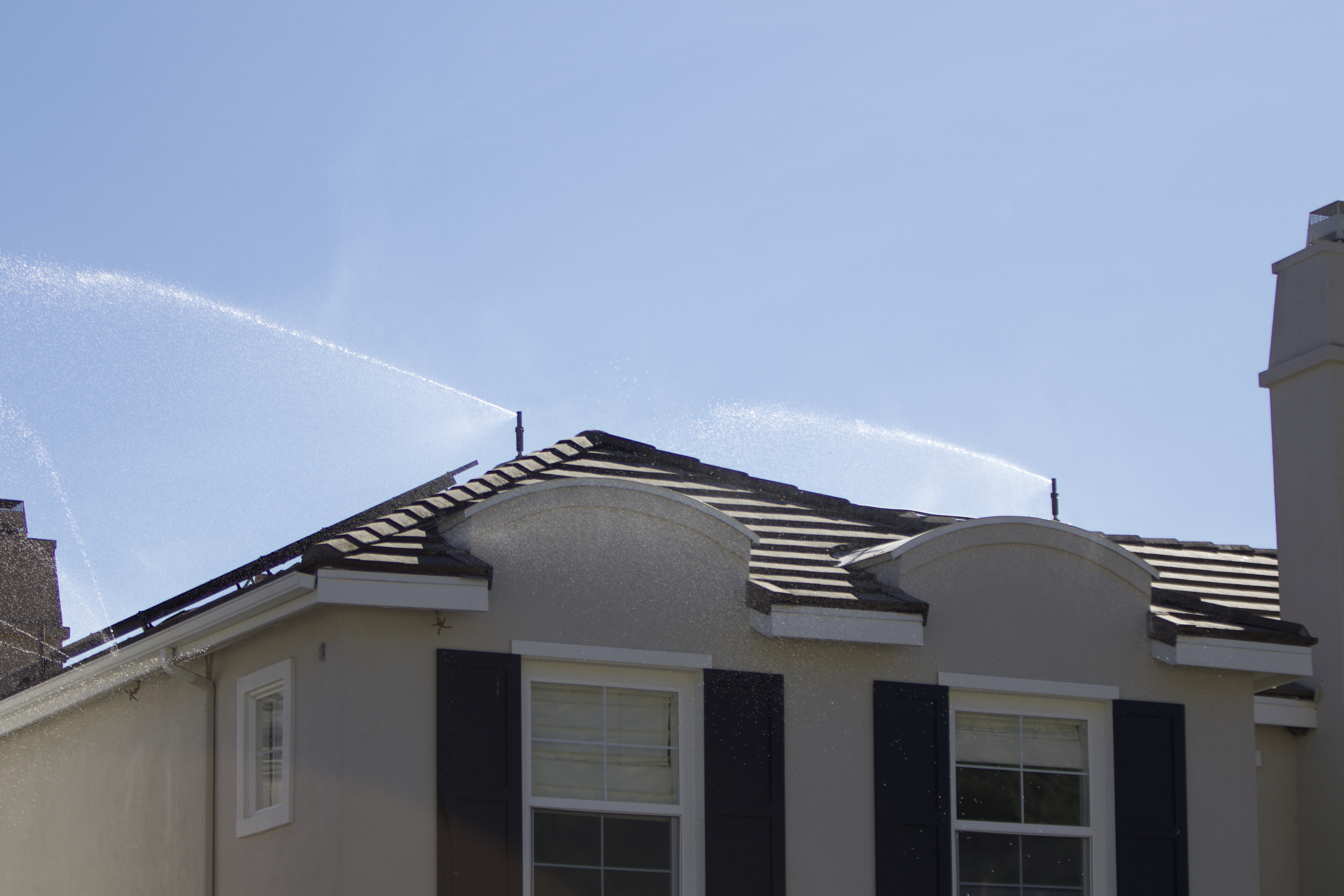
They help by actively pre-wetting rooflines, eaves, decks, fences, and perimeter fuels so embers are less likely to establish sustained ignition.
Company / FAQ
This page collects the questions people most often ask when they are evaluating active exterior wildfire defense for a home, estate, or light commercial property.
If you want the conceptual overview first, start with The Wildfire Problem and The Solution.
General
They help by actively pre-wetting rooflines, eaves, decks, fences, and perimeter fuels so embers are less likely to establish sustained ignition.
Roof coverage targets ridges and upper surfaces, eave coverage protects perimeter edges and transitions, and tripod coverage extends defense into directional ground-level exposure zones.
No. Active mitigation is designed to complement defensible space, maintenance, and hardening rather than replace them.
Pressure, stored water, run time, and pumping options determine whether a proposed coverage plan can actually operate during a wildfire event.
Planning
Yes. Many properties begin with kits for immediate readiness and later expand into broader zone coverage, pumping support, or more permanent installation.
Planning usually starts with roof ridges, eaves, transitions, decks, fences, and directional exposure zones where embers are most likely to collect.
No. Some properties are good candidates for modular kits, while others need custom planning because of scale, routing, water complexity, or long-term integration goals.
Ideally before fire season or underwriting deadlines, so the layout, operating sequence, and deployment logic are settled before conditions deteriorate.
Insurance
No. Insurance decisions remain with carriers and underwriting parties, although a system can support a clearer mitigation narrative.
It gives property owners a more concrete explanation of how ignition-prone surfaces and perimeter zones are intended to be protected during an event.
Yes. The planning logic can apply to estates, community properties, and light commercial sites where stakeholders need a clearer mitigation framework.
That is where a direct planning conversation helps. Property geometry, water access, and operational needs all shape the right answer.
Next Step
Homeowners
See how Trident frames active defense for owner-occupied and second-home properties.
Insurance
Review how active mitigation fits into property-level insurance conversations.
Contact
Use the contact page when you need an answer tied to a real property and real constraints.