
Worsening Conditions
Seven of California's ten most destructive wildfires1 to date have burned since 2015.
The Problem
Wildfire Season has extended by 71 Days since 1970.
Fires are now both Fuel and Wind Driven, spreading faster than ever before.
Wildfires are moving into neighborhoods and homes are burning.
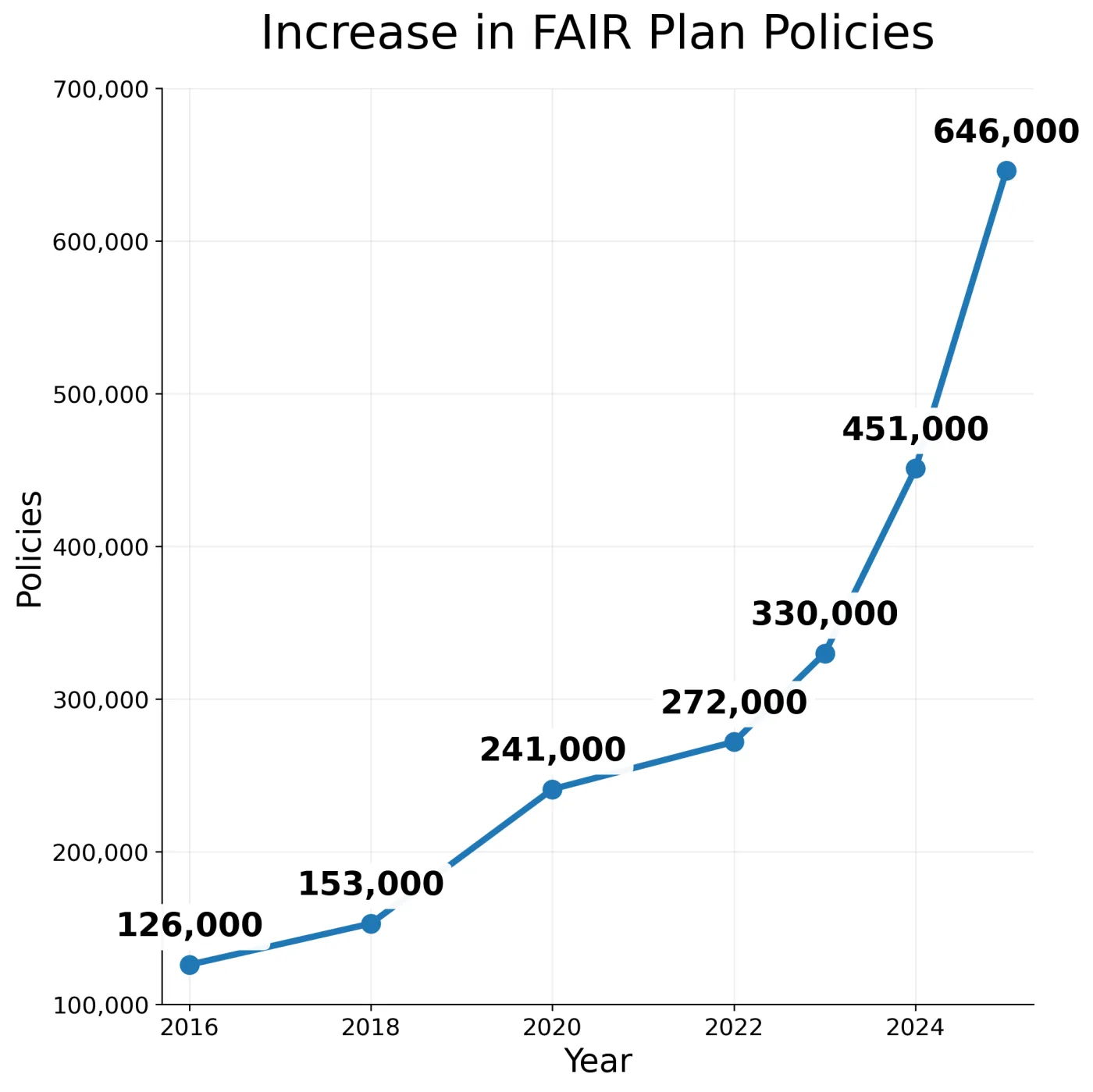
California's insurer of last resort is exploding in size. New and renewed FAIR Plan policies grew from 141,192 in 2016 to 324,954 in 20232, and the plan reported 696,562 policies in force in June 20263 as private insurers retreat from wildfire-exposed areas.
Non-renewals and cancellations run near 10% of policies statewide and reached 16.3%2 in the ten counties with the most homes at high wildfire risk in 2023. As fires grow larger, more frequent, and increasingly destructive, insurers are retreating from high-risk areas.
As policyholders are pushed out of the private market, the California FAIR Plan has grown to $768 billion in insured exposure3 (June 2026) - and the 2025 Los Angeles fires triggered a $1 billion emergency assessment4 to support claims payments.
What it means to protect a home in California is Changing...
Sources: CAL FIRE, CAL FIRE Top 20, CA FAIR Plan, CA DOI
Embers Are The Threat
Wind-driven embers can travel up to 2 miles ahead of the main fire front, reaching a home long before flames arrive.
Once they land, embers can ignite the most vulnerable parts of a property - including roofs, vents, gutters, decks, fencing, mulch, and surrounding vegetation - turning small ignition points into full structure fires.
Hardening Alone Is Not Enough
Embers accumulate in hidden vulnerable zones. They can lodge in roof transitions, gutters, vents, fencing, mulch, and dry vegetation surrounding the home.
During wildfire events, roads close, chaos, resources, stretched thin, making it difficult for firefighters to arrive on time or at all.
Passive measures are an important first step, but they still leave too much to chance. Wildfire behavior is unpredictable, and ember landing patterns can create hidden ignition points that passive protection alone cannot fully prevent.
Exterior sprinklers add that operational layer, helping interrupt ember-driven ignition when the home is under active exposure.
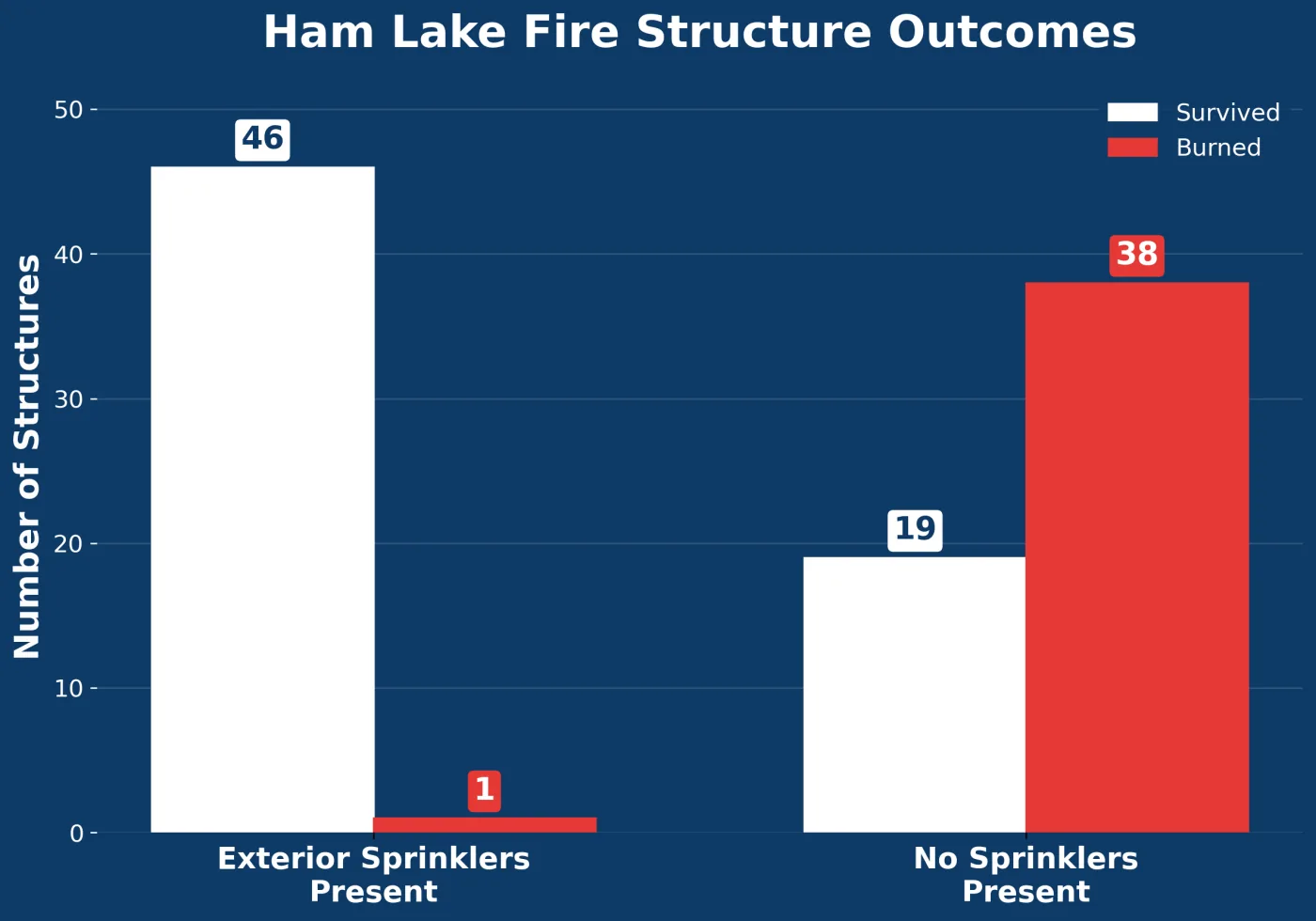
In the Ham Lake Fire, all but one structure with a working sprinkler system survived, and 72% of threatened structures that survived had working sprinklers6.
Sources: Ready For Wildfire, IBHS, Ham Lake Report
This Effects You
For Homeowners
A home is far more than a building. It is the center of daily life - where mornings begin, families gather, and memories are made. It is also the largest financial investment most people will ever make. Wildfires do not just threaten the structure - it puts a family's stability, belongings, and future on the line.
For Insurers
The Math Is Broken. The 2017 and 2018 fire seasons cost insurers nearly twice the underwriting profit of the previous 26 years7. As wildfire losses grow more severe and less predictable, insurers are being forced to pull back, raise premiums, or search for more measurable ways to reduce property-level risk.
For Builders
Homes in wildfire-prone areas need to be designed and upgraded with modern fire behavior in mind. That means thinking beyond code-minimum hardening and implementing exterior sprinkler systems into new builds for maximum protection.
Active Risk Reduction is the Missing Piece
Exterior sprinkler systems use water and retardant to wet ignition-prone surfaces before embers can take hold and spread into the structure. By applying a protective layer across the parts of the home most vulnerable to ember attack - including roofs, vents, gutters, and perimeter fuels - they help reduce the chance that a small ember becomes a major structure fire. That is where active defense changes the equation: not by replacing hardening, but by adding a protective layer during the moment it matters most.

Sources: CA DOI Market Update, CA FAIR Plan, CA OSFM
Get Protected today before the next Red Flag Warning.